Asbestos Floor Tiles: Identification, Testing & What to Do
Older vinyl and thermoplastic floor tiles may contain asbestos, but appearance alone is not enough to confirm it. If you are planning refurbishment, lifting flooring or disturbing old adhesive, professional asbestos testing and sampling can establish what is present before work begins.
What Are Asbestos Floor Tiles?
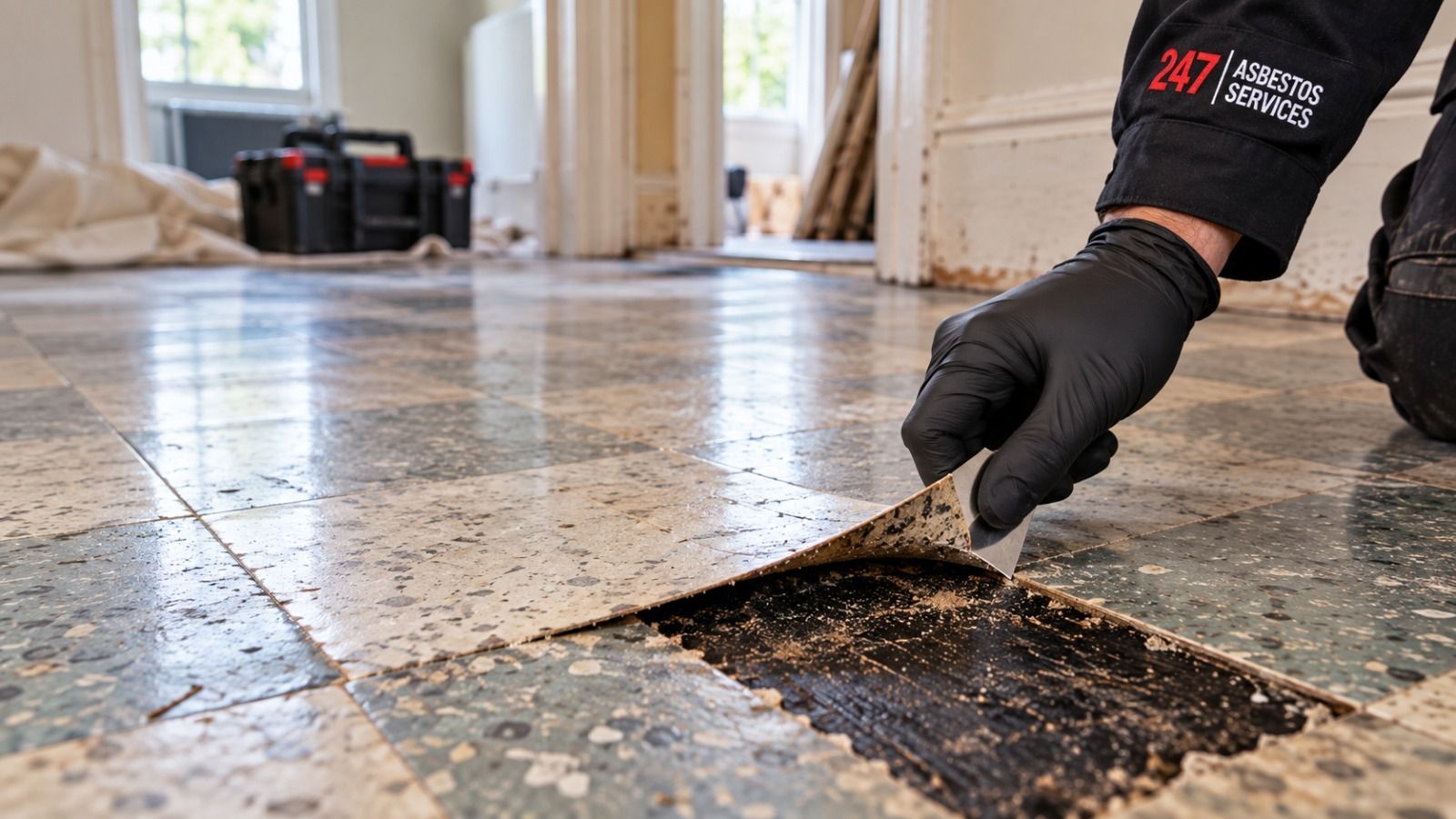
Asbestos was historically used in some vinyl and thermoplastic floor tiles to improve strength, durability and heat resistance.
These tiles were installed in homes, schools, offices, shops, factories and other buildings, particularly in older properties.
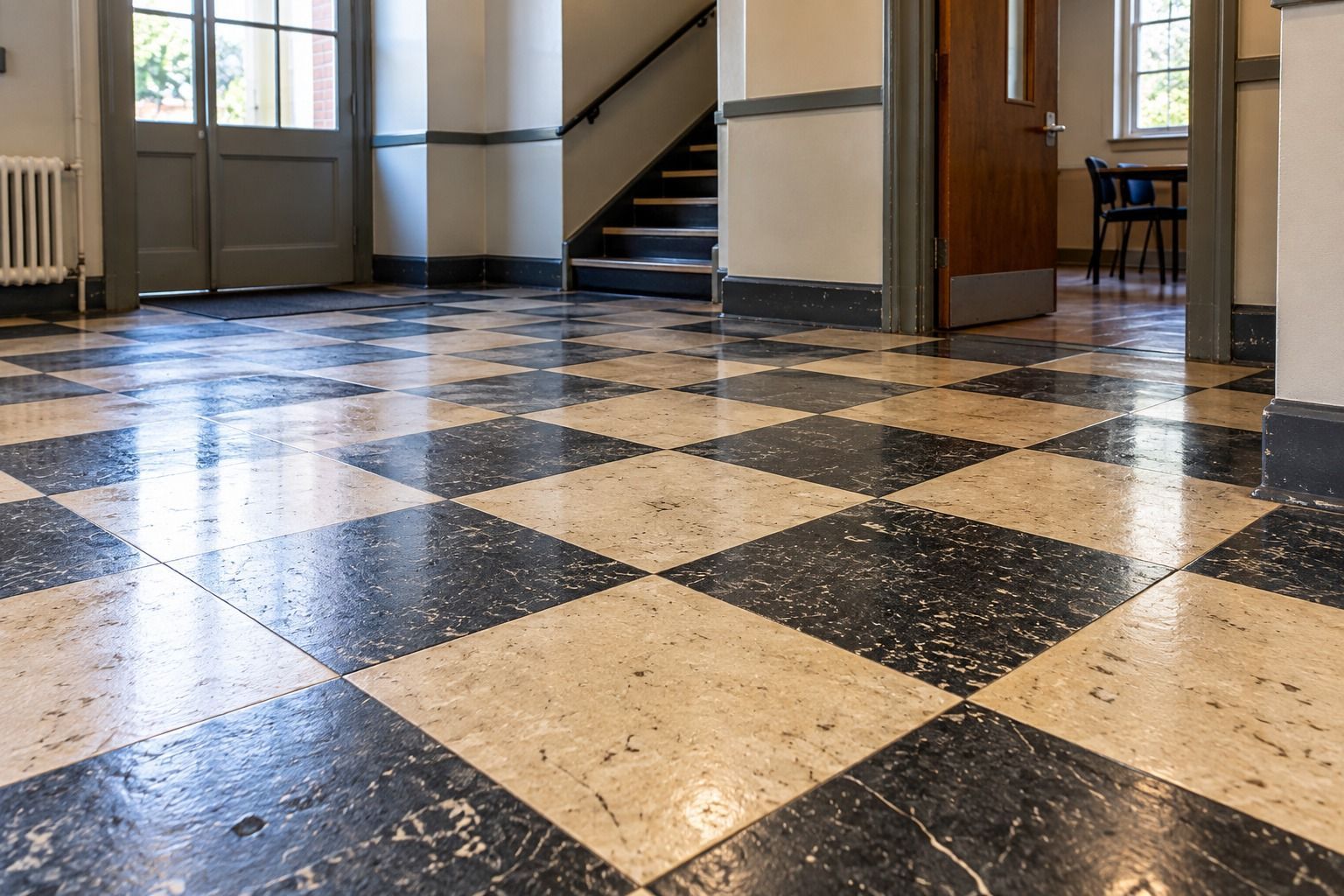
Not every old floor tile contains asbestos, and many asbestos-containing tiles can look very similar to non-asbestos products. Visual identification should therefore be treated as an indicator, not confirmation.
If you are unsure whether the flooring needs targeted testing or a wider inspection, our asbestos survey guide explains the main survey options.
How Can You Tell If Floor Tiles Contain Asbestos?
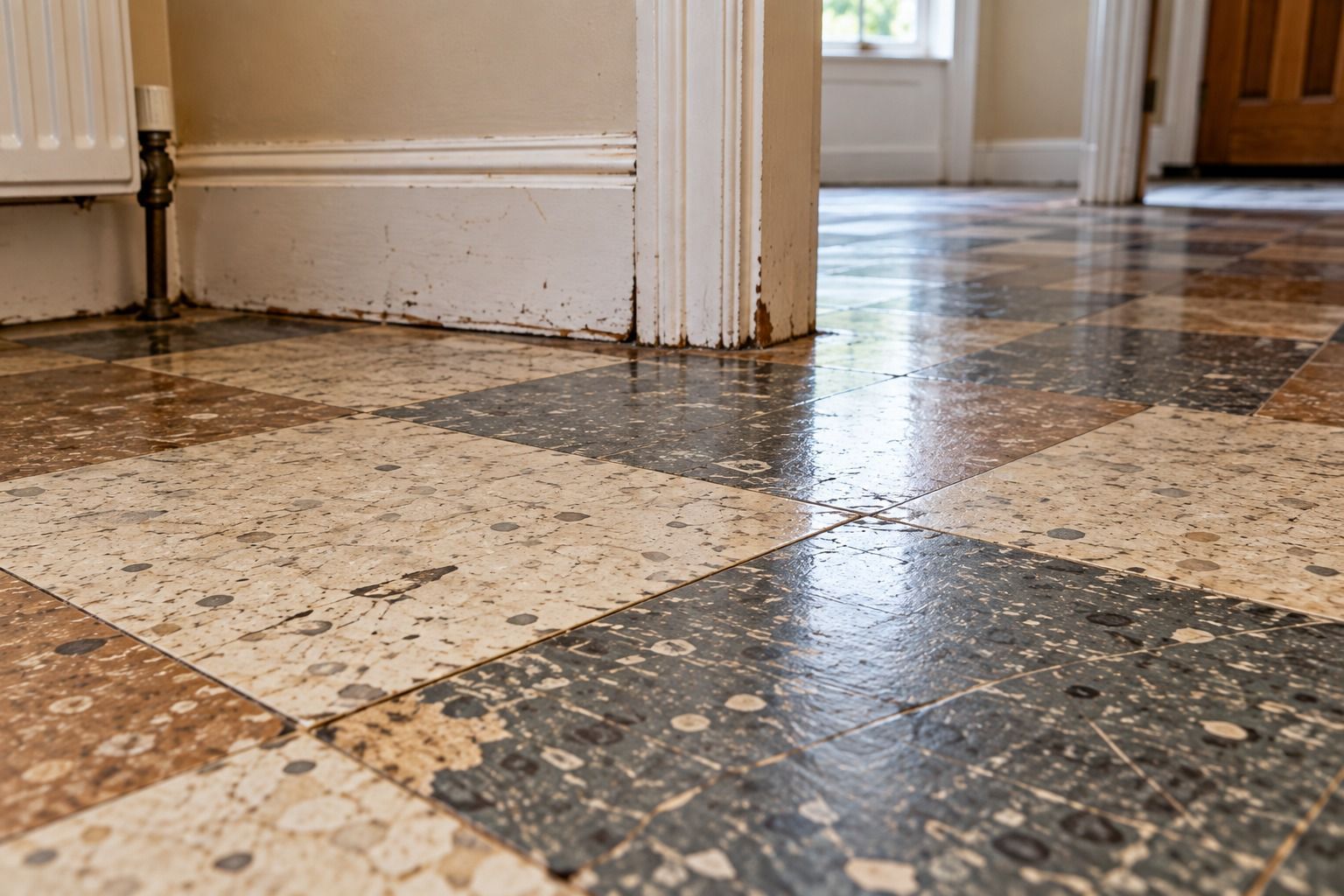
You cannot reliably identify asbestos floor tiles by colour, pattern or size alone. Some characteristics may justify further investigation, but laboratory analysis is the reliable route.
Older Tile Formats
Older vinyl or thermoplastic tiles, including some smaller square formats, deserve closer assessment where the installation history is unknown.
Condition & Age
Brittle, worn or damaged tiles in older properties may justify testing before refurbishment or flooring work begins.
Adhesive Below
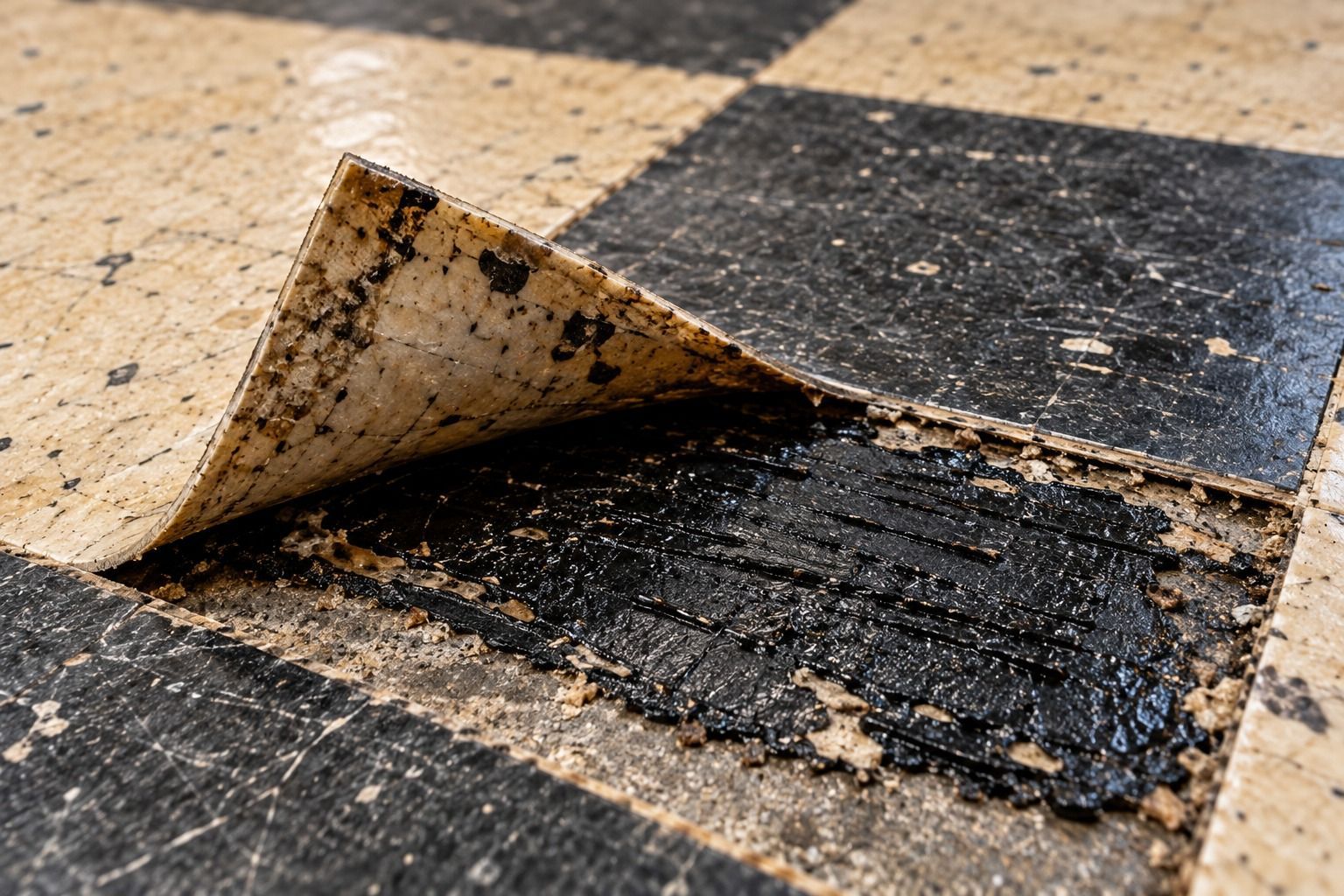
Black adhesive, bitumen or mastic beneath old tiles can be a separate suspect material and should not be ignored.
Can Vinyl Floor Tiles Contain Asbestos?
Yes, some older vinyl floor tiles contained asbestos. This is why searches for vinyl asbestos floor tiles and asbestos in vinyl floor tiles are common during renovation.
The age of the property and flooring can provide useful context, but they do not confirm whether asbestos is present.
If you are planning intrusive work across a wider area, a full asbestos survey may be more appropriate than sampling one tile.
What About the Black Adhesive Underneath?
Older floor tiles were sometimes fixed using black bitumen or mastic-style adhesives. The tile and the adhesive should be considered separately because one may contain asbestos even if the other does not.
This becomes particularly important during refurbishment because lifting the tile exposes the adhesive beneath.
How Do You Test Floor Tiles for Asbestos?
Testing normally involves taking a small representative sample of the suspect tile and, where relevant, the underlying adhesive. For more detail, see our asbestos testing and sampling guide.
Inspect
Assess the tile type, condition and area of concern.
Select
Choose a representative sampling point.
Sample
Carefully collect, seal and label the material.
Analyse
Laboratory analysis determines whether asbestos fibres are present.
Results
Receive a clear result so the work can be planned appropriately.
Do I Need a Floor Tile Test or a Full Asbestos Survey?
Sampling May Be Appropriate If:
- One floor covering is in question
- No wider intrusive work is planned
- You need confirmation before minor works
- You only need laboratory identification
A Wider Survey May Be Better If:
- Several rooms are being refurbished
- Walls, ceilings or voids will also be disturbed
- Flooring removal forms part of a larger project
- Structural changes are planned
For renovation, strip-out or structural work, see our Refurbishment & Demolition Asbestos Surveys.
Do Asbestos Floor Tiles Always Need to Be Removed?
No. If asbestos-containing floor tiles are in good condition and are unlikely to be disturbed, they may sometimes remain in place and be managed appropriately.
The right decision depends on condition, location, planned work, likelihood of disturbance, whether the adhesive also contains asbestos and future maintenance requirements.
Can You Cover Asbestos Floor Tiles?
In some situations, existing asbestos-containing tiles may be covered rather than removed, provided they are in suitable condition and the proposed work will not create unnecessary disturbance.
- Laminate over existing tiles
- Carpet over existing tiles
- Vinyl over existing tiles
- Ceramic tiles over existing tiles
- Floor paint or encapsulation
- Professional assessment before works
Before Removing or Lifting Old Floor Tiles
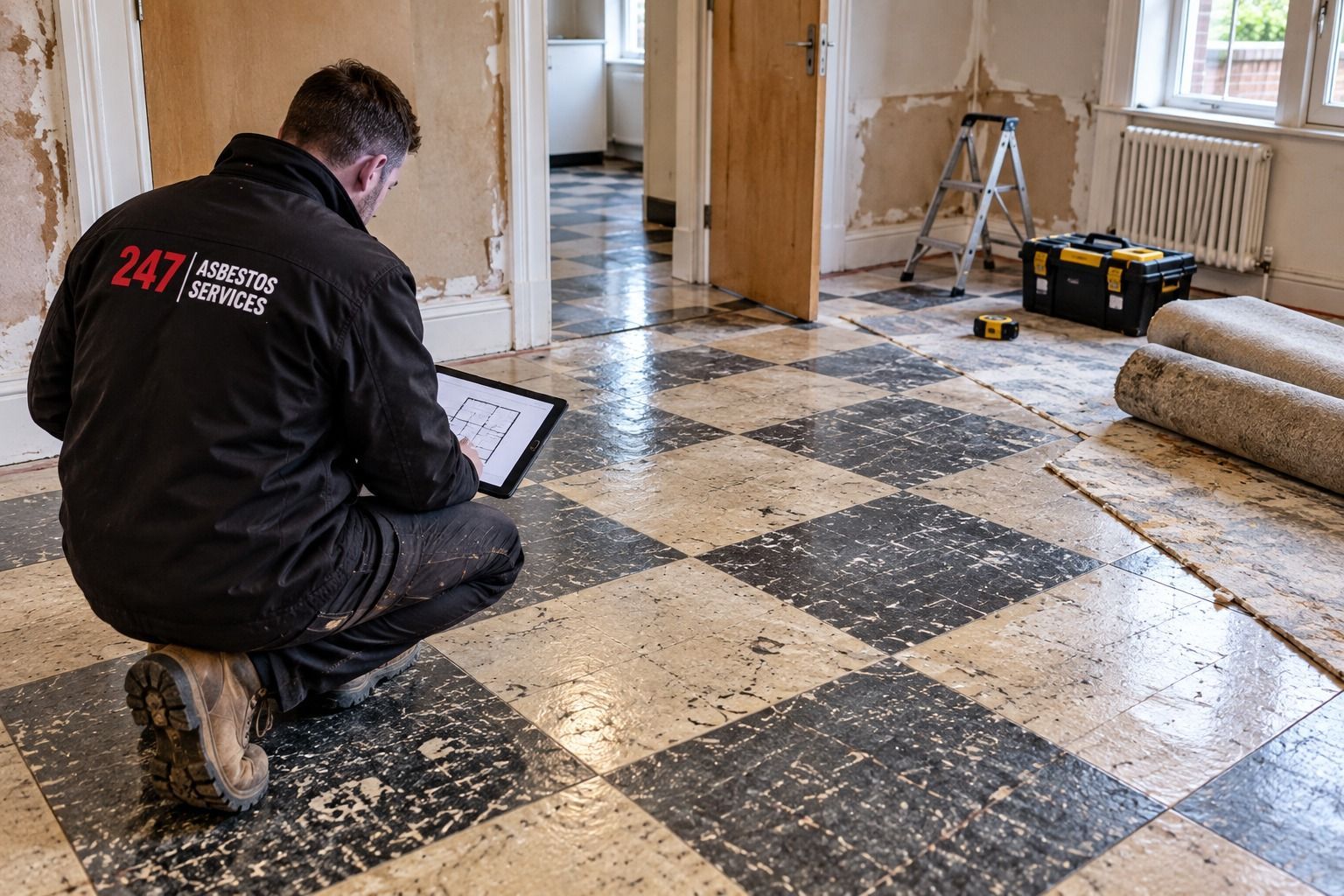
Do not start lifting, breaking or scraping old tiles if asbestos is suspected. Removal can disturb both the tiles and any adhesive underneath.
How Much Does Asbestos Floor Tile Removal Cost?
Removal cost can vary considerably depending on floor area, tile condition, adhesive type, access, disposal requirements and whether other suspect materials are involved.
247 Asbestos Services does not carry out asbestos removal. Our role is to identify what is present and provide clear evidence before you obtain removal quotations.
If you are comparing the cost of inspection and testing first, see our asbestos survey cost guide.
Are Damaged Asbestos Floor Tiles Dangerous?
Risk depends on whether asbestos is present, the condition of the material and how likely it is to be disturbed.
- Avoid breaking tiles
- Avoid drilling through them
- Avoid aggressive scraping
- Avoid sanding or grinding
- Do not assume adhesive is asbestos-free
- Arrange advice before renovation
Independent Asbestos Floor Tile Testing
247 Asbestos Services provides independent asbestos surveys, testing and reporting. We do not carry out asbestos removal, so our role is to identify what is present and give you clear evidence rather than sell removal work afterwards.
For wider documentation requirements, see our asbestos reports and management plans service.
Asbestos Floor Tile FAQs
Clear answers to the questions homeowners, landlords and contractors most often ask when old flooring is uncovered or renovation is planned.
How can I tell if old floor tiles contain asbestos?
You cannot reliably identify asbestos floor tiles by appearance alone. Older vinyl or thermoplastic tiles may justify further investigation, but laboratory testing is required to confirm whether asbestos is present.
What do asbestos floor tiles look like?
There is no single colour, pattern or size that proves a floor tile contains asbestos. Some older tiles may share common visual characteristics, but similar-looking non-asbestos products also exist.
Can vinyl floor tiles contain asbestos?
Yes. Some older vinyl and thermoplastic floor tiles contained asbestos. The age of the flooring can provide useful context, but testing is needed to confirm the material.
Do 9-inch floor tiles contain asbestos?
Some older 9-inch floor tiles may contain asbestos, but the size alone does not confirm it. If the tiles are old and their history is unknown, sampling can establish what they contain.
Can the black adhesive under old floor tiles contain asbestos?
Yes. Some historic black bitumen or mastic-style adhesives may contain asbestos. The tile and the adhesive should be considered separately because one may contain asbestos even if the other does not.
Should I test old floor tiles before renovation?
Yes, where the flooring is old, its composition is unknown and the planned work could disturb it. Testing before lifting or removing flooring helps establish what is present before work begins.
Do I need an asbestos survey or just a floor tile test?
A targeted sample may be enough if one specific flooring material is the only concern. A wider asbestos survey may be more appropriate if refurbishment affects several rooms or other building materials.
Can asbestos floor tiles be left in place?
Yes. If asbestos-containing floor tiles are in good condition and are unlikely to be disturbed, they may sometimes remain in place and be managed appropriately.
Can I cover asbestos floor tiles with laminate or carpet?
In some situations, yes. The existing tiles need to be in suitable condition and the new flooring should be installed without unnecessarily disturbing them. The material should be identified first.
Can I tile over asbestos floor tiles?
Sometimes, but the condition of the existing floor and the installation method matter. If the work requires lifting, drilling or scraping the existing tiles, they should be assessed before work starts.
Are damaged asbestos floor tiles dangerous?
Risk depends on whether asbestos is present, the condition of the tiles and how likely they are to be disturbed. Cracked, broken or badly worn tiles deserve more attention than intact flooring being left undisturbed.
What should I do if I accidentally break an old floor tile?
Stop disturbing the area and avoid further breaking, scraping or sanding. If the material may contain asbestos, arrange professional advice so the material can be identified and the next step planned properly.
Can I remove asbestos floor tiles myself?
Do not assume removal is straightforward. The material should first be identified and the work assessed so the correct precautions and disposal arrangements can be determined.
How are asbestos floor tiles tested?
A small representative sample of the suspect tile is carefully collected, sealed and sent for laboratory analysis. The adhesive underneath may also need separate testing.
How long does asbestos floor tile testing take?
247 Asbestos Services issues reports within 48 hours, with 24-hour reporting available on request.
Do asbestos floor tiles always need to be removed before selling a property?
No. The presence of asbestos does not automatically mean removal is required. The condition of the material, likelihood of disturbance and any planned works are more important factors.
Suspect Asbestos in Old Floor Tiles?
Do not guess before lifting flooring or beginning renovation work. Arrange professional sampling and laboratory testing to establish whether asbestos is present and understand what to do next.