Duty To Manage Asbestos In Commercial Property
A practical guide to Regulation 4 of the Control of Asbestos Regulations 2012 for commercial property owners, landlords, facilities managers and other dutyholders. Understand how to identify asbestos, maintain a register, build a management plan, brief contractors and keep your arrangements under review.
Start Here
What Does Duty to Manage Asbestos Actually Mean?
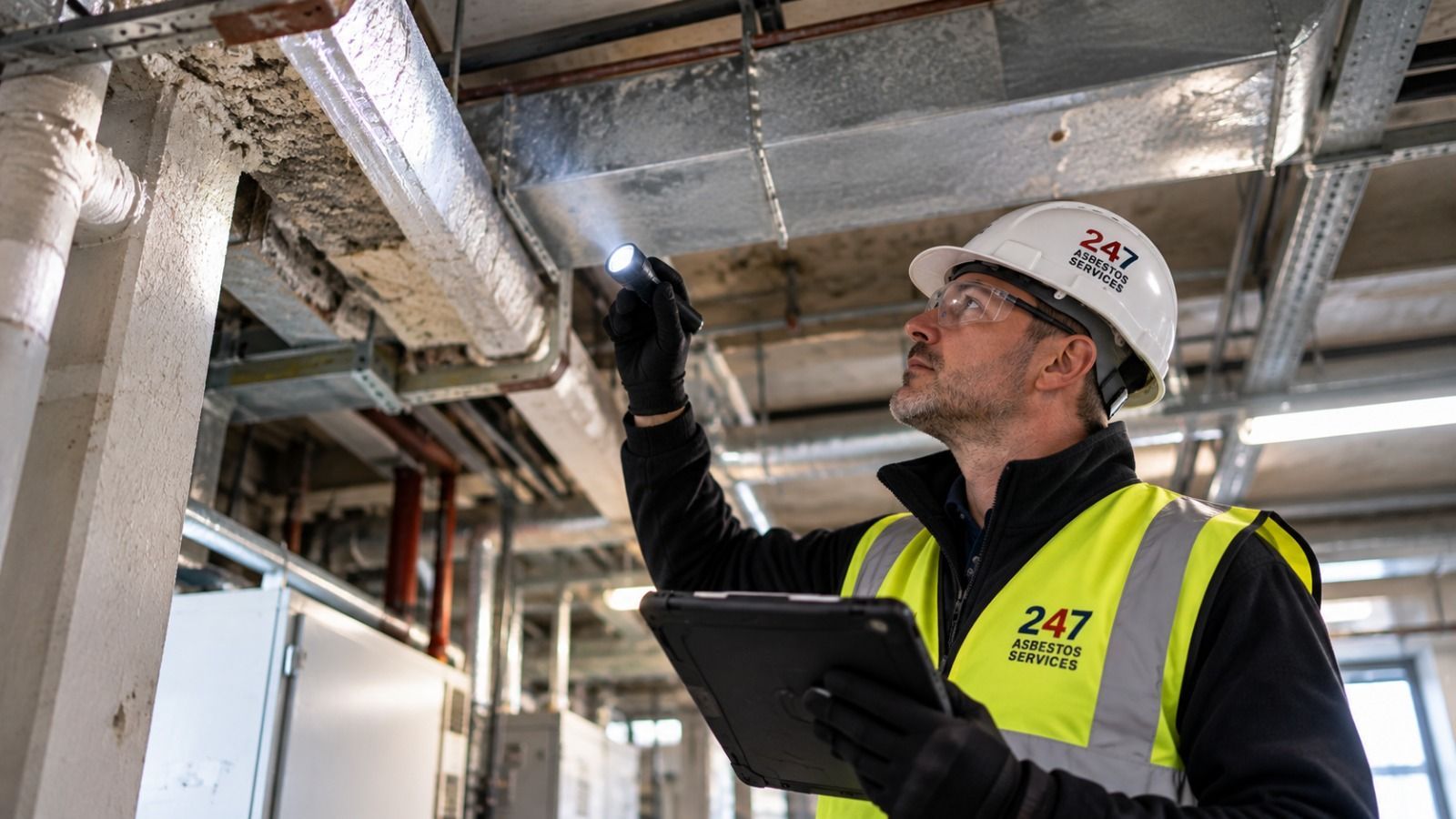
Regulation 4 of the Control of Asbestos Regulations 2012 places a duty to manage asbestos in non-domestic premises and can also apply to common parts of domestic premises. The process is about establishing whether asbestos is present or likely to be present, recording the information, assessing risk and putting practical controls in place.
The duty is not simply to commission a survey. The asbestos information needs to remain usable, be communicated to people who may disturb the building fabric, and be reviewed as the building, its condition or the work taking place changes.
A Management Asbestos Survey can provide the evidence needed to support this process, while the resulting information can feed into your asbestos register and written management arrangements.
Assess
Take reasonable steps to establish whether asbestos is present or likely to be present.
Know what you are managing.Record
Keep an up-to-date record of the location and condition of known or presumed asbestos-containing materials.
Make the information usable.Manage
Prepare, implement and review a plan for managing the risk and communicating relevant information.
Turn records into action.Establish What Is Present
Review existing information and arrange an appropriate survey where reliable asbestos information is not already available.
→ 02 / Record ItBuild The Register
Record the location, extent, condition and relevant assessment information for known or presumed asbestos-containing materials.
→ 03 / Plan ItSet Out How Risk Is Managed
Create practical arrangements for monitoring, communication, maintenance, contractor access and planned work.
→ 04 / Review ItKeep The Information Current
Monitor known materials, update records when circumstances change and review the plan so it remains useful in practice.
→Who Is Responsible?
The Dutyholder Is Usually Determined By Who Controls Maintenance And Repair
Responsibility does not simply follow a job title. Commercial leases, contracts and actual control of the premises can determine who has responsibility for maintaining or repairing different areas of a building.
Property Owner Or Landlord
Owners or landlords may retain responsibility for the building fabric, common parts, structure, roofs, plant or other areas they are obliged to maintain or repair.
Tenant Or Occupier
A tenant may hold duties where the lease gives them responsibility for maintaining or repairing the relevant part of the premises.
Facilities Manager Or Managing Agent
Facilities teams and agents often administer the practical system: surveys, registers, contractor briefings, monitoring and document control.
Shared Responsibility
In multi-occupied buildings, more than one party may hold duties for different areas depending on contractual responsibility and control.
For client-specific support, see Commercial Property Owners, Facilities Managers and Landlords.
Does The Duty Apply To My Building?
Start With The Premises, Its Age And Who Controls Maintenance
The duty is aimed at non-domestic premises and can also extend to common parts of domestic premises. Buildings constructed or refurbished before 2000 deserve particular attention because asbestos-containing materials may still be present.
Offices, Shops & Mixed-Use Buildings
Ceilings, service risers, floors, partitions, plant rooms and back-of-house areas can all contain asbestos-containing materials in older premises.
Factories, Workshops & Warehouses
Older industrial buildings may contain asbestos cement, insulation products, lagging, gaskets, panels, roofing and plant-associated materials.
Schools & Public Buildings
Large estates often require reliable records, clear contractor communication and planned monitoring across multiple buildings and maintenance teams.
Communal Areas
Stairwells, corridors, plant rooms, communal stores and shared service spaces can fall within non-domestic management responsibilities.
Building age is an important clue, not the whole legal test. Responsibility still turns on the premises, the maintenance and repair obligations, and the asbestos information available.
Start With Reliable Asbestos Information
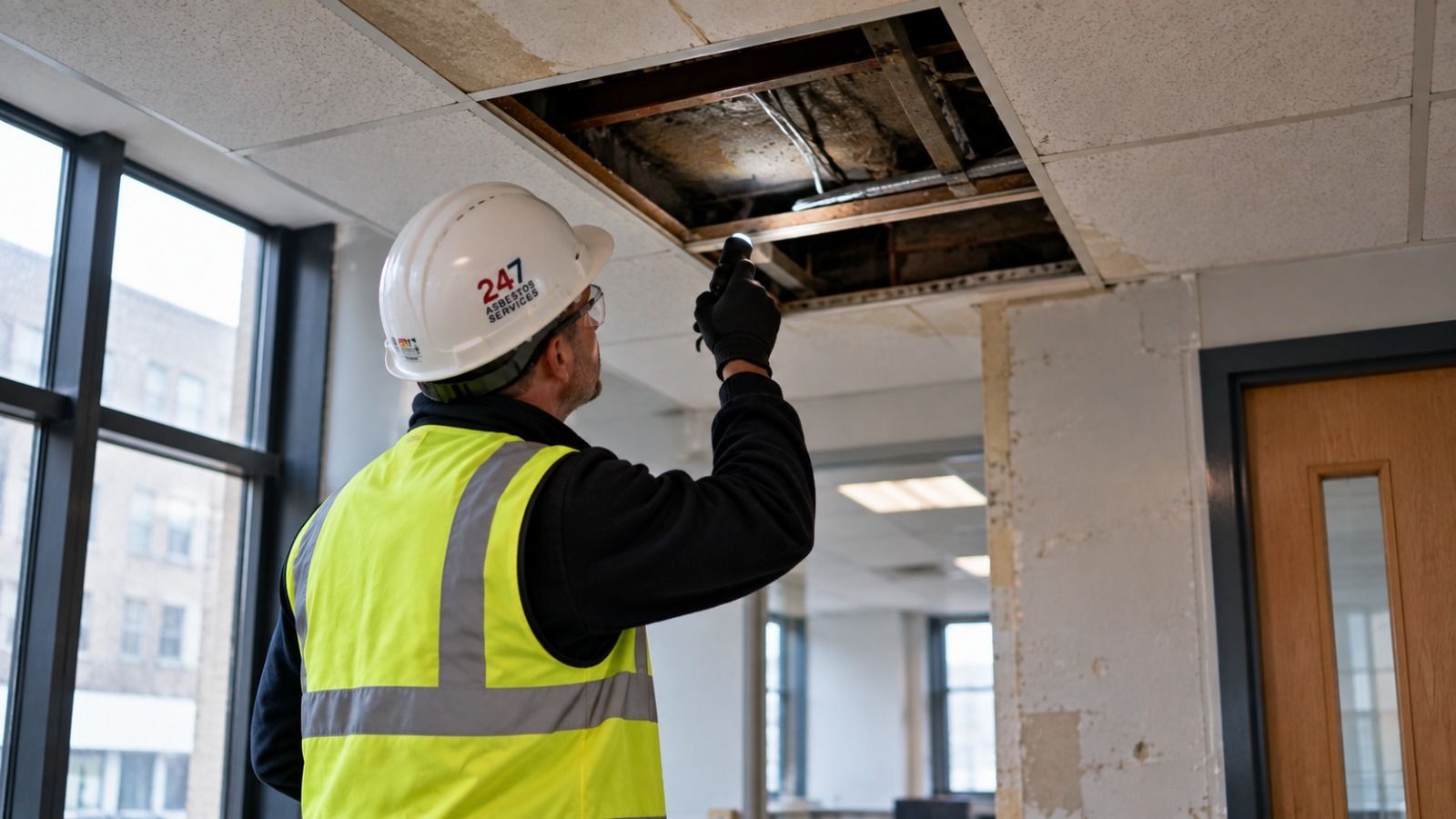
If the building may contain asbestos, you need reliable information before you can manage the risk.
A Management Asbestos Survey is commonly used for premises that remain in normal occupation. It is designed to identify asbestos-containing materials that could be disturbed during everyday use, routine maintenance or foreseeable access.
Existing records may also be relevant, but they need to be suitable for the building, sufficiently complete and current enough to support safe decisions.
- Purpose
- Locate and assess ACMs relevant to normal occupation and maintenance.
- Feeds Into
- The asbestos register, risk decisions and management arrangements.
Build And Maintain The Asbestos Register
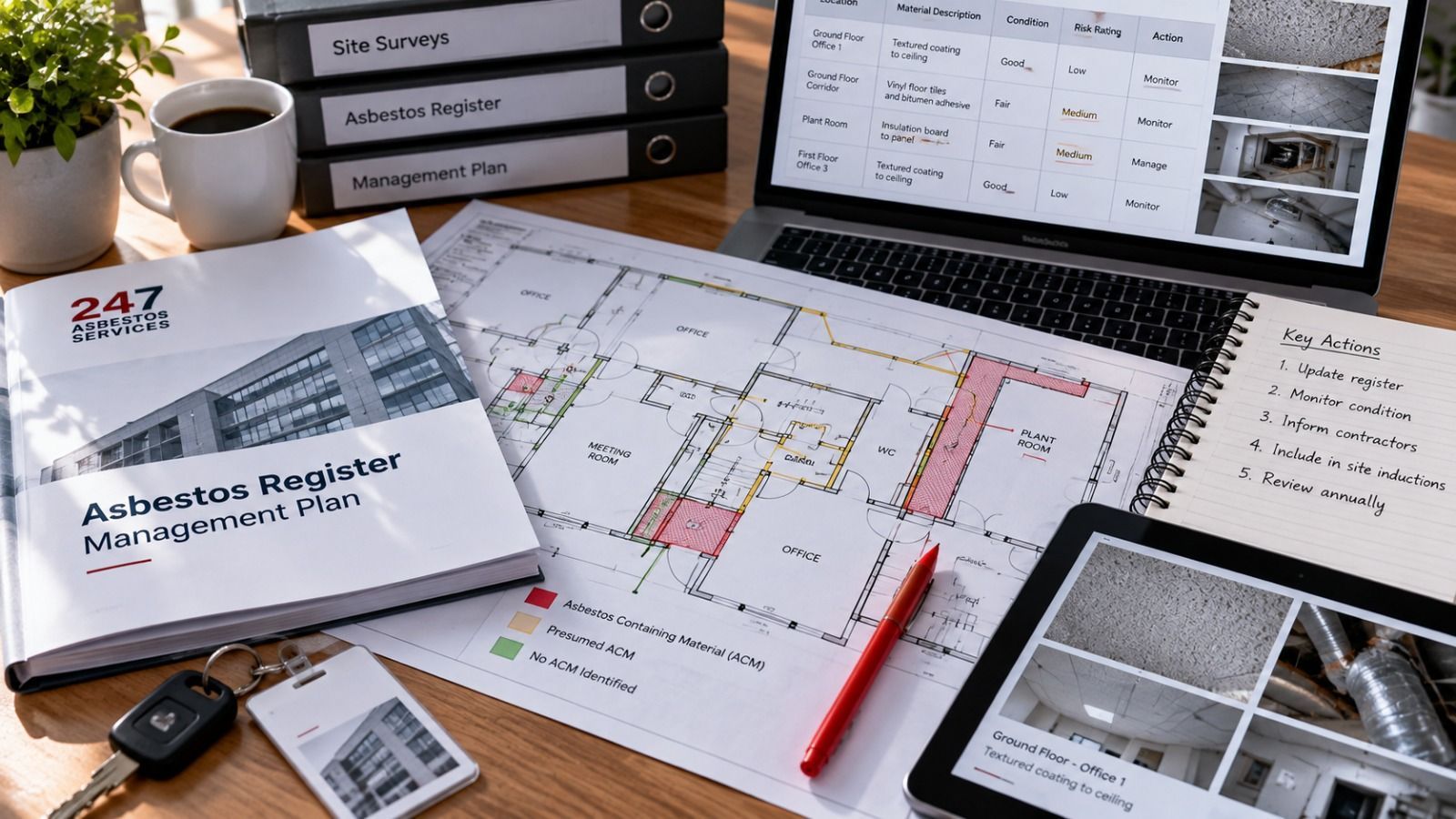
The register should be a usable live record — not a report filed away and forgotten.
The register should identify where known or presumed asbestos-containing materials are located and provide enough information for people managing the building to understand their condition and significance.
It should remain accessible to people who need it and be updated when surveys, sampling, remedial work, damage or building changes alter the information.
For a deeper explanation, see the Asbestos Register & Management Plan Guide.
- Typical Record
- Location, material, extent, condition, assessment and required action.
- Key Principle
- Update the register whenever new information changes what is known.
Risk + Management
Turn Survey Information Into A Working Management Plan
Identifying asbestos is only the first part. The practical question is what you will do with the information — who is responsible, what will be monitored, how contractors will be briefed and what happens before planned work.
Survey
Establishes where asbestos is present or presumed and records relevant findings from the inspection.
Think: evidence.Register
Provides the live record of known or presumed ACM locations, condition and management information.
Think: record.Management Plan
Sets out how the organisation will control, monitor, communicate and review the asbestos risk in practice.
Think: action.A useful management plan should make responsibilities clear, describe how known materials will be monitored, explain how contractors receive relevant information, and set out what happens when maintenance or refurbishment work is proposed.
247 can support the reporting and management-information side through our Asbestos Reports & Management Plans service.
Before Anyone Disturbs The Building Fabric, Check The Asbestos Information
Electricians, plumbers, heating engineers, IT installers, builders, decorators, roofers and other contractors may all disturb hidden building materials. Relevant asbestos information should be available before drilling, cutting, opening, removing or penetrating areas that may contain asbestos. Relevant information should also be available to emergency services where it may affect their work.
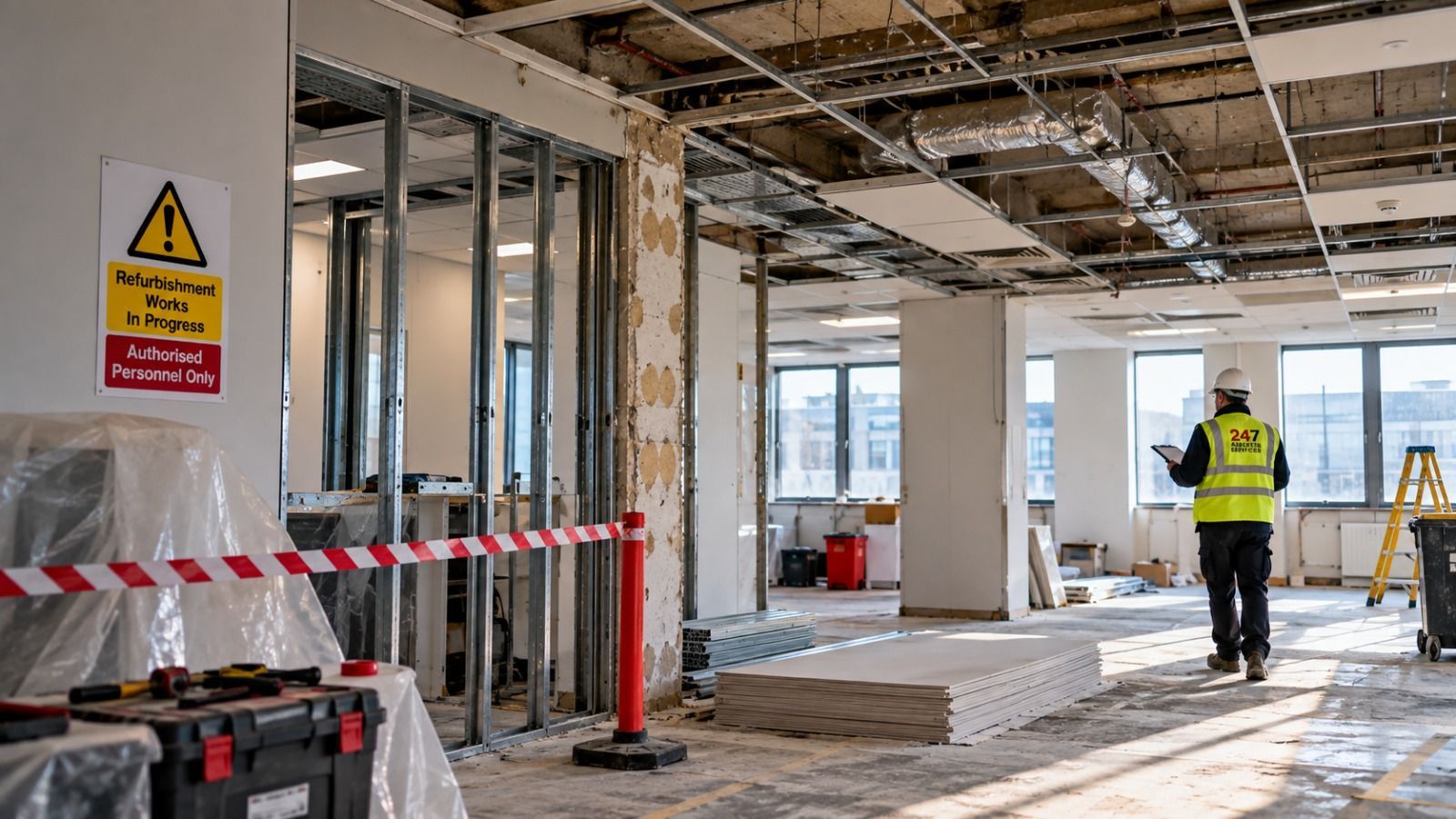
A Management Survey Does Not Automatically Cover Intrusive Refurbishment
The survey type has to match the work that is actually going to disturb the building.
If a project will disturb walls, ceilings, floors, service ducts, partitions, roof structures or other concealed areas, the existing management information may not be sufficient for that work.
A more intrusive Refurbishment & Demolition Asbestos Survey may be required for the relevant work area before the project starts.
- Trigger
- Intrusive refurbishment, strip-out, demolition, fit-out or major service work.
- Do Not Assume
- An older management survey automatically covers hidden areas affected by new works.
Monitoring + Reinspection
Finding Asbestos Once Does Not End The Management Process
Known or presumed asbestos-containing materials need to remain under review so deterioration, damage, building changes or new work do not make existing records misleading. The asbestos management plan should be reviewed at least every 12 months, and sooner where circumstances make that necessary.
Material Damage
If an ACM becomes damaged or deteriorates, the record and management response may need to change.
Water Ingress
Leaks and building defects can change the condition of materials that were previously stable.
Building Work
Maintenance or refurbishment can alter areas, expose hidden materials or remove previously recorded ACMs.
Change Of Use
Different occupancy or access patterns can alter the likelihood of disturbance.
New Survey Data
Additional sampling or surveys should be reflected in the register and management information.
Planned Maintenance
Recurring works can increase disturbance risk in locations that were previously low priority.
The frequency of physical condition checks for individual ACMs can vary according to their condition, location, accessibility and likelihood of disturbance. The 12-month point applies to reviewing the management plan itself; it should also be reviewed sooner when significant changes occur.
If you need an updated inspection or review of existing asbestos information, contact 247 Asbestos Services and we can advise on the most appropriate next step.
Damage, Deterioration Or New Information
What If Asbestos Is Damaged Or Its Condition Changes?
Do not treat a change in condition as an administrative update only. If a known or suspected asbestos-containing material becomes damaged, avoid unnecessary disturbance, restrict access where appropriate and obtain competent advice.
Stop
Avoid further unnecessary disturbance while the material and its condition are being assessed.
Protect the area first.Assess
Obtain competent advice and, where appropriate, use asbestos testing and sampling to confirm suspect materials.
Base decisions on evidence.Update
Reflect new findings, sampling results, remedial work or changed condition in the asbestos register and management plan.
Keep the record live.Why Duty to Manage Deserves Attention Now
HSE continues to inspect how organisations manage asbestos in non-domestic premises. The practical focus remains straightforward: know what is present, keep the register current, maintain a written plan, communicate the information and make sure the arrangements work in practice.
Commercial Duty to Manage Checklist
Can You Answer Yes To Each Of These?
Use this as a practical sense-check of the asbestos information and management arrangements available for your premises.
Duty to Manage Asbestos FAQs
Common questions from commercial property owners, landlords, facilities managers and organisations responsible for maintaining non-domestic premises.
Who is responsible for asbestos in a commercial property?
Responsibility usually follows who has control of maintenance and repair under the lease, contract or management arrangement. In some buildings, more than one party may hold responsibility for different areas.
Does every commercial building need an asbestos survey?
The need for a survey depends on the building, its age, the reliability of existing asbestos information and how the premises are being managed or altered. Where asbestos may be present and reliable information is not available, an appropriate survey can help establish what needs to be managed.
Is an asbestos survey the same as an asbestos register?
No. A survey provides inspection findings. The register is the live record used to identify where known or presumed asbestos-containing materials are located and what is known about their condition.
Is an asbestos register the same as a management plan?
No. The register records asbestos information. The management plan explains how the organisation will control the risk, monitor materials, communicate information and review its arrangements.
Do contractors need to see the asbestos register?
Anyone whose work could disturb asbestos-containing materials needs relevant asbestos information before work starts. The information supplied should be appropriate to the location and scope of the work.
Can asbestos remain in a commercial building?
Yes. Asbestos does not automatically have to be removed simply because it is present. Materials in suitable condition may sometimes be managed in place where they can be monitored and protected from disturbance.
Do I need another asbestos survey before refurbishment?
Possibly. A management survey is not designed to fully investigate all hidden areas that intrusive refurbishment may disturb. Planned work may require a more intrusive refurbishment and demolition survey for the affected area.
How often should asbestos be reinspected?
The asbestos management plan should be reviewed at least every 12 months and sooner where necessary. The frequency of condition checks for individual asbestos-containing materials can vary depending on their condition, location, accessibility and likelihood of disturbance.
What should I do if asbestos is damaged?
Avoid further unnecessary disturbance, control access where appropriate and obtain competent advice. The asbestos records and management arrangements should then be updated to reflect the changed condition and any action taken.
Does 247 Asbestos Services remove asbestos?
No. 247 Asbestos Services provides independent asbestos surveys, sampling, testing, reports and management information. We do not carry out asbestos removal, helping keep our survey advice independent from removal sales.
Not Sure Whether Your Current Survey, Register Or Management Plan Is Still Adequate?
Whether you need to establish what asbestos is present, update existing records or check that your information is suitable before planned work, speak to 247 Asbestos Services about the most appropriate next step.