
Black Mastic & Bitumen Adhesive: Testing, Identification & What to Do
Older black flooring adhesives can sometimes contain asbestos. If black mastic or bitumen adhesive is exposed beneath old tiles, testing can confirm what is present before refurbishment, scraping or floor removal begins.
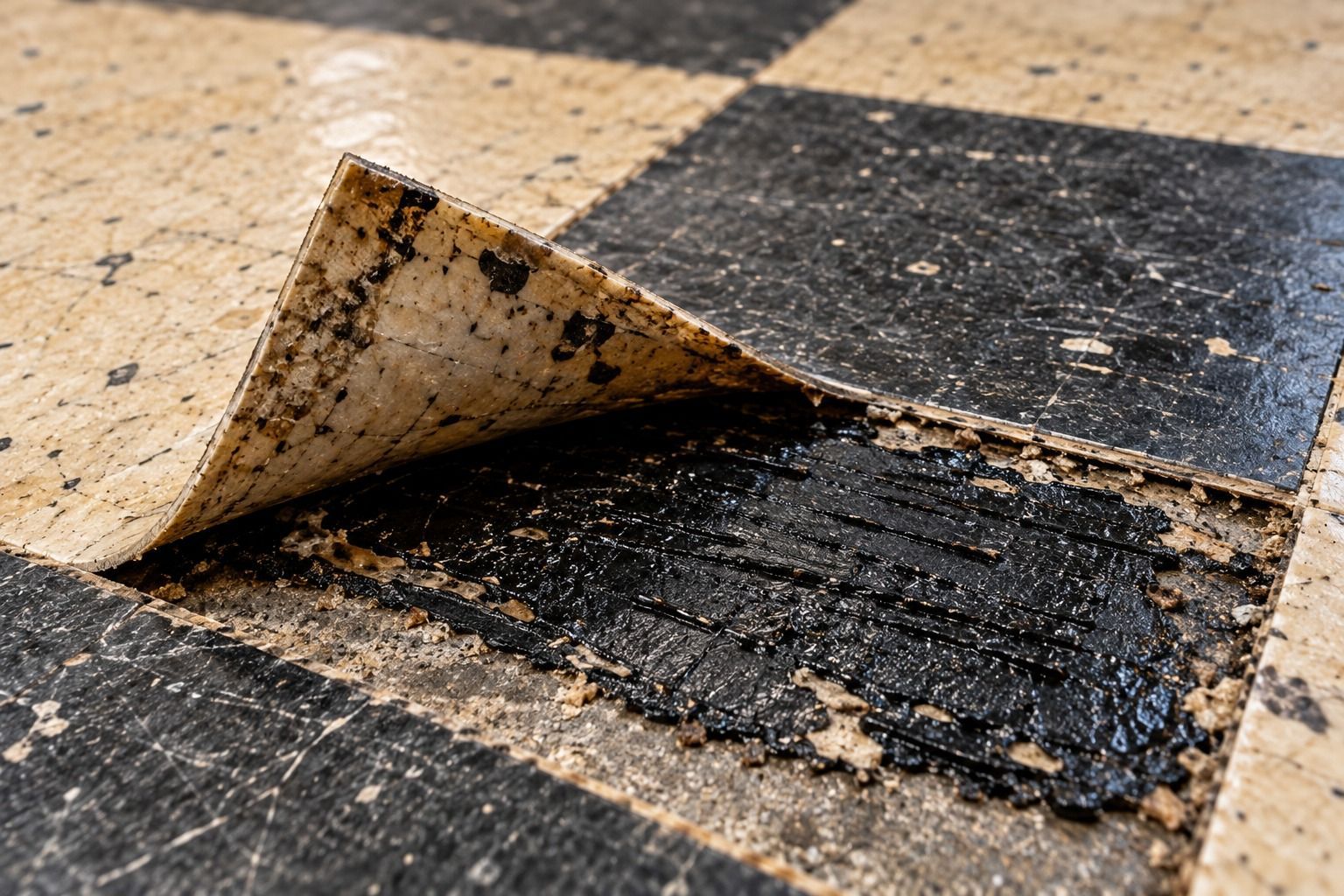
What Is Black Mastic?
Black mastic is a dark adhesive historically used beneath some vinyl, thermoplastic and other floor coverings. Bitumen-based adhesives can look tar-like or black-brown once exposed.
The tile and adhesive should be treated as separate materials because one may contain asbestos even if the other does not.
If you have older tiles above the adhesive, see our asbestos floor tiles guide.
How Can You Tell If Black Adhesive Contains Asbestos?
You cannot reliably confirm asbestos from colour, texture or age alone. Representative sampling and laboratory analysis provide confirmation.
Look at Context
Older flooring systems, unknown installation dates and refurbishment work can justify further assessment.
Do Not Assume
Black colour does not prove asbestos. Similar non-asbestos adhesives were also widely used.
Test Before Disturbance
Sampling can establish what is present before scraping, grinding or removing the floor build-up.
Before Scraping, Grinding or Refurbishing
If suspect black adhesive will be disturbed, stop unnecessary work until the material has been identified.
Targeted Sampling May Be Enough
- One flooring system is the only concern
- The adhesive is exposed and accessible
- No wider intrusive work is planned
A Wider Survey May Be Better
- Several rooms are being refurbished
- Other suspect materials may be disturbed
- Strip-out or structural works are planned
For broader intrusive work, see our Refurbishment & Demolition Asbestos Surveys.
How Is Black Mastic Tested?
A representative sample is carefully taken, sealed and sent for laboratory analysis. Where both tile and adhesive are suspect, each material may need to be considered separately.
See our asbestos testing and sampling guide for the wider process.
Black Mastic FAQs
Does all black mastic contain asbestos?
No. Black colour alone does not confirm asbestos. Laboratory testing is needed to establish whether a particular adhesive contains asbestos.
Can black adhesive under vinyl tiles contain asbestos?
Yes. Some historic flooring adhesives may contain asbestos, so the tile and adhesive should be considered separately.
How do you test black mastic for asbestos?
A small representative sample is taken and sent for laboratory analysis to determine whether asbestos fibres are present.
Should I test black mastic before removing old floor tiles?
Yes, where the adhesive is old, its composition is unknown and removal work could disturb it.
Can I scrape black mastic off a floor?
Do not assume old adhesive is safe to scrape or grind. Identify the material first if asbestos is a possibility.
Can black mastic be left in place?
In some situations, intact material may be managed in place. The right approach depends on condition, location and planned work.
Do I need a full asbestos survey for black mastic?
Not always. A targeted sample may be enough if the adhesive is the only concern. Wider refurbishment may justify a broader survey.
How quickly are black mastic test results available?
247 Asbestos Services issues reports within 48 hours, with 24-hour reporting available on request.
Found Black Adhesive Beneath Old Flooring?
Confirm what you are dealing with before scraping, grinding or refurbishment begins.